
Fiji economic growth forecast cut
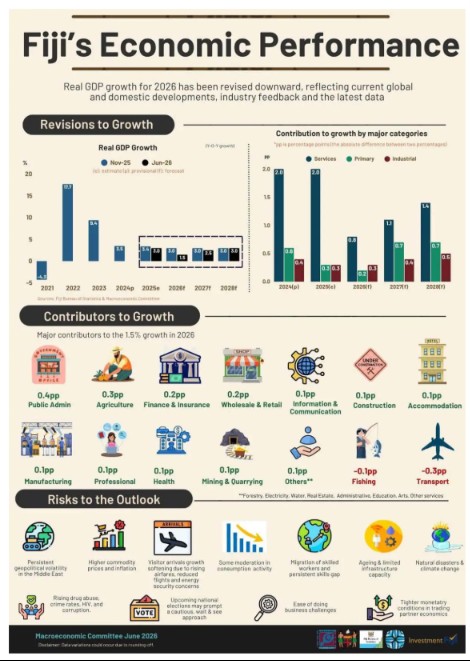
(ISLANDS BUSINESS) — Fiji’s central bank has sharply lowered its economic growth outlook for 2026, warning that higher fuel prices, rising inflation and softer consumer spending are slowing activity.
Reserve Bank of Fiji Governor, Ariff Ali, noted that global risks had risen in recent months due to escalated conflict in the Middle East, higher oil prices, and uncertainty over shipping routes through the Strait of Hormuz.
“Those pressures are already being felt in Fiji through higher import costs, especially for fuel, food and fertiliser,” he said in a statement.
“The jump in global fuel prices is increasing transport and production costs, squeezing business profits and pushing up prices for households.
“Inflation in Fiji rose to 3.9 percent in May, a sharp reversal from -3.8 percent in September 2025, and year-end inflation is now expected to exceed 6.0 percent.”
The downgrade also reflects weaker domestic demand.
He said households are spending more cautiously as the cost of living rises and economic uncertainty builds.
In its latest Retail Sales Survey, businesses now expect sales to grow by 2.0 percent in 2026, well below the 6.8 percent forecast in the August 2025 survey.
Tourism, one of Fiji’s main growth drivers, is still expanding but momentum has begun to slow.
“Visitor arrivals remain supportive of the economy, but forward bookings, reduced flight frequencies, energy-security concerns and tighter monetary conditions in key markets, including Australia, are expected to slow growth further.”
“On that basis, Fiji’s economy is now projected to grow by 1.5 percent in 2026, down from the 3.0 percent forecast issued in November 2025,” he said.
Ali said downside risks remain elevated and that the outlook will depend on how long the current global shock lasts and how it affects both overseas and local demand.
Growth is still expected to improve in the following years, with the economy forecast to expand by 2.5 percent in 2027 and return to about 3.0 percent in 2028.
Services, particularly tourism, are expected to remain the main engine of growth, with support from the industrial and primary sectors.
He added Fiji’s external position remains manageable despite a wider trade and current account deficit caused by higher fuel import costs, and the gap is expected to be financed by foreign reserves and government loan drawdowns.
As of 09 June9, reserve holdings stood at about $3.4 billion (US$1.7 million), or enough to cover roughly 4.7 months of retained imports.
“The committee will continue to monitor incoming data and global developments and revisit its projections later this year,” he said.
This article first appeared at Islands Business.