
Opinion: Building a Pacific Standard that proves value
By Glynis Miller, Trade Commissioner, Pacific Trade Invest (PTI) New Zealand
The Pacific Islands have never lacked for product stories. What we have lacked, too often, is a consistent way to convert those stories into trust, and that trust into premium value. From single-origin vanilla and cocoa to kava, coconut products, seaweed, fisheries, pearls, timber, woven handicrafts and natural beauty products, the region’s exports carry something the global marketplace is actively searching for: authenticity, provenance, sustainability, and a human scale of production.
Across the 16 Pacific Island countries, the combined annual value of agriculture, fisheries, forestry and handicraft exports is conservatively estimated at around US$3 billion a year. While petroleum and minerals do dominate export totals for a handful of economies, they are not included in the export basket that a Pacific Standard is designed to lift.
In many markets, Pacific products still compete in the same lane as mass-produced imports: priced as commodities, and small-scale supply, often supported by preferential trade agreements. Competition in the export markets of choice challenges producers in the Pacific to lift their standard. The garment industry knows this too well where fabric quality, garment construction, sizing consistency and labelling requirements are essentially recognised standards, not to mention compliance with international regulations. Overall, standards play a vital role in maintaining consistency, safety and ethical responsibility. A regionally owned Pacific Standard would strengthen compliance, protect reputation, lift prices, and export something intangible yet too rarely recognised beyond our own borders: Pacific values.
Why does such a standard matter? What must it include? And why does the Pacific need a framework designed for Pacific Island countries’ realities?
The Pacific’s value proposition is real, but fragile
The global marketplace has changed. Major retailers, hospitality chains, importers and ecommerce platforms now demand traceability, quality assurance, ethical sourcing and sustainability reporting as a matter of routine.
In the major international markets for Pacific products, compliance requirements are rising. Even in markets that remain price-sensitive, buyers are increasingly cautious about reputational risk. A single contamination incident, a labour allegation or a mislabelled product can destroy confidence – and it can take years to rebuild that confidence.
This is particularly challenging for the Pacific because many exports originate from smallholder farms, community cooperatives, village fisheries and informal micro-enterprises.
The production base is not the problem. In fact, it is part of the Pacific story. The problem is that small producers often face a compliance environment designed for industrial-scale exporters, with the same paperwork expectations, audit burdens and cost structures.
The result is a pattern that repeats across the region. Pacific products are sought after, but not always stocked consistently. They are celebrated in tourism and diaspora circles, but struggle to build an enduring market share internationally. A Pacific Standard would address this trust gap directly.
Why a regional standard, and why now?
Many Pacific Island countries already have domestic standards agencies and regimes, biosecurity requirements, fisheries management rules, foreign investment frameworks, export licensing systems and other controls. Some sectors, such as tuna fisheries, already work within international frameworks. However, regulatory capability and enforcement capacity varies widely between countries, and often within countries.
Laboratories, certification bodies and inspection systems can be expensive for small economies to maintain. Documentation can be inconsistent. Even where good laws exist, implementation can be uneven.
A regional Pacific Standard does not replace national systems. It complements them by creating a shared benchmark that is recognised, trusted and repeatable across borders. It provides a common language for buyers, a consistent compliance pathway for exporters, and a shared platform for capacity building.
And the Pacific may well have a blueprint for how to do this. As the Pacific Islands Forum Secretariat noted in its 2018 update to Forum Trade Officials, Quality Infrastructure (QI) is not a slogan but an institutional system essential for trade, safety and environmental protection and comprises policy and regulation, metrology, standardisation, accreditation, and conformity assessment through testing, inspection and certification, to support Pacific Island countries to meet international standards.
It is this infrastructure that allows exporters to provide credible evidence that goods meet buyer and regulatory requirements. Importantly, the Pacific’s QI work was framed around regional realities – small economies, high compliance costs, limited laboratory capacity and uneven enforcement – and proposed practical steps, including updated regional studies, capacity-building tools, workshops to validate priorities, and partnerships with institutions such as the Caribbean Regional Organisation for Standards and Quality, Standards Australia and the National Metrology Institute of Germany (PTB).
There are five reasons as to why this matters for our Blue Pacific economies. First, our region is increasingly being asked to prove sustainability, not simply claim it. Second, the Pacific’s export profile is diversifying beyond traditional commodities into high-value niche products where certification and storytelling matter. Third, global consumer expectations have shifted sharply in favour of ethical and traceable goods. Fourth, the Pacific brand, when managed well, can command a premium. Fifth, digital traceability tools are now affordable enough to be deployed even in small producer settings. The conditions for success are better than they were a decade ago, when the region initially toyed with such an idea.
What a Pacific Standard should mean
A Pacific Standard must be more than a logo or a marketing label. It must be a system: rules, verification, auditing, capacity building, and certification. It must have credibility for import regulators and buyers, and be achievable for Pacific producers. At its core, it should certify that a product meets Pacific-defined benchmarks across the five pillars that buyers and regulators increasingly expect.
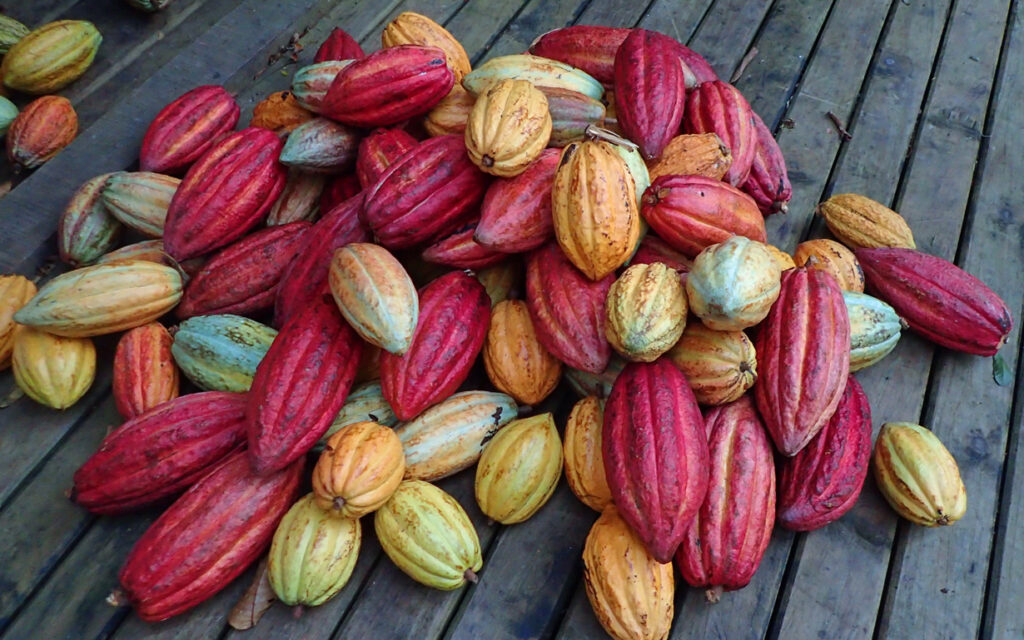
Quality and product integrity must be measurable. Product quality and integrity include such criteria as moisture content, purity, shelf life, handling, packaging, and product safety. Benchmarks should address contamination risks, adulteration, and accurate labelling. Different export categories require different benchmarks, from kava hygiene and cultivar assurance to cocoa and vanilla fermentation standards, and from natural oils purity to durability and honest origin claims in handicrafts. Quality reduces rejections, protects reputation and strengthens negotiating power.
The standard must address weights, measures and trade accuracy. Many disputes and margin losses begin with inconsistent weights, unverified scales, unclear grading, and non-standard packaging. A credible Pacific Standard must include a metrology component: verified measurement tools, consistent pack sizes, and transparent protocols. A regional approach can reduce costs through shared calibration services and common training.
Sustainability and environmental stewardship must be measurable and sector-specific. For fisheries, this could include catch documentation, bycatch minimisation, and compliance with management plans. For forestry, it could cover legal harvest and regeneration. For agriculture, it should include soil health, water management, and responsible chemical use. For handicrafts, it should ensure sustainable harvesting of raw materials and avoidance of restricted species. Sustainability in the Pacific also means resilience. Climate-smart production must be embedded.
Ethical production and labour practices can no longer be optional. Global due diligence expectations are rising, particularly in the European Union. The standard should cover worker safety, fair recruitment, prevention of child labour, and gender equity, with documentation requirements that are realistic for small producers.
The standard must deliver traceability and provenance. Pacific authenticity is a major advantage, but it must be provable. Traceability can start simply, by using batch numbers, cooperative records, offline digital logs, and scale up as exporters grow. Traceability also protects the region from misrepresentation and substitution, safeguarding the Pacific brand.
Learning from the past: the True Pacific experience
The Pacific does not need to start from scratch. An earlier effort in New Zealand, True Pacific, tried to create a shared regional brand and assurance framework for Pacific products. It was well-meaning, but failed to gain traction. The main obstacle was the practicality of sustaining producer participation across many countries, products and supply chains. Commercially, the incentives were too weak to encourage exporters to carry the costs of compliance. Governance was also a constraint, with regional ownership, accountability and long-term funding hard to maintain. At the time, traceability tools were costly and digital compliance limited. The key lesson is clear: standards must be systems, not just logos.
Developing a credible Pacific Standard
A Pacific Standard will only deliver value if it is trusted, and trust depends on disciplined design and implementation. The standard must be regionally owned and supported by national governments, ideally mandated through an appropriate Pacific institution, but not dominated by any one country. Governance should include the private sector, producer voices and technical expertise, supported by a clear structure: a governing council, a technical standards committee and an independent certification body.
Technically, the standard should align with international benchmarks such as the Codex Alimentarius Commission for food safety, ISO standards where relevant, and importing market requirements. It should adapt global standards to Pacific realities and create practical pathways towards recognised certifications such as HACCP, MSC, FSC, and organic standards.
Finally, a Pacific Standard requires enabling infrastructure: testing services, calibration for weights and measures, inspector training, and digital systems with clear data governance and offline-first tools. Buyers must recognise the certification for it to succeed. Indeed, some of this work is already underway in the region.
A credible Pacific Standard would add value in several ways:
*It would support premium pricing in niche markets where provenance, ethics and sustainability are rewarded. It would reduce export rejections and disputes, therefore saving costs and protecting relationships.
*It would strengthen bargaining power by shifting exporters from commodity pricing to value-based pricing.
*It would build a stronger collective Pacific profile, helping small islands amplify their presence while retaining national identity.
*It would also protect the Pacific brand as a long-term reputational asset.
With the introduction of a Pacific Standard, even a 5 percent–10 percent premium on an estimated US$3 billion export basket could deliver US$150–US$300 million annually. The Pacific already has the story. It is time to build the system that makes the story credible and bankable