
New toolkit aims to strengthen Fiji business resilience
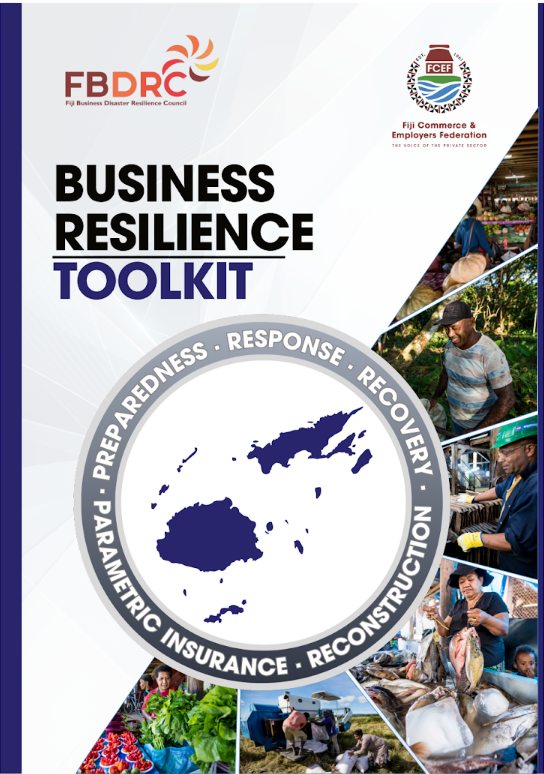
Fiji’s business community has been urged to strengthen its disaster preparedness and recovery plans following the launch of a new Business Resilience Toolkit designed to help companies better respond to cyclones, flooding and economic shocks.
The toolkit, launched by the Fiji Commerce and Employers Federation (FCEF), aims to provide businesses with practical guidance to anticipate, withstand, respond to and recover from disasters and emergencies.
Speaking at the launch, FCEF Vice President Rowena Taito said the toolkit was developed after months of collaboration and consultation, particularly with micro, small and medium enterprises (MSMEs), which continue to face repeated disruptions from natural disasters and global economic pressures.
“For businesses in Fiji, disruption is not a distant risk,” Taito said.
“We have lived through cyclones, floods, health crises, supply chain breakdowns and economic shocks.”
She said international disruptions were also increasingly affecting Fiji through rising costs, supply chain pressures and wider economic uncertainty.
Research shows nearly 80 per cent of MSMEs in Fiji are affected by cyclones and flooding at least once every year.
“When a business is disrupted, it is not just revenue at stake,” Taito said.
“It is jobs, livelihoods, families and communities.”
She said the toolkit includes checklists, business continuity templates, disruption assessment forms and recovery guidance tailored specifically for Fiji’s business environment.
The resources are designed to help businesses answer key questions about preparedness, continuity and recovery during emergencies.
“We want every business, from small family enterprises to large organisations, to be able to answer these questions with confidence – are we prepared, do we have a plan, how long can we operate during a disruption and how quickly can we recover?”
Taito pointed to lessons from Tropical Cyclone Winston, saying that larger companies with structured continuity plans recovered faster, while smaller suppliers and businesses within the same value chain struggled.
“If our MSMEs and smaller suppliers are not prepared, the entire value chain is at risk,” she said.
She said the launch marked only the beginning of a wider effort, with FCEF and FBDRC planning awareness sessions, training and outreach programs across urban and rural communities to help businesses use the toolkit effectively.
This article first appeared at Islands Business.